Archive - Fresh Off the Farm RSS Feed

Light in the Dark

pencil sketch, chicken house,grove of trees, grove, trees,

The Brooder House

We have a couple of houses for our chickens.  One houses the laying hens and a rooster.  The brooder house keeps the new chicks warm in the cooler temperatures.  The oldest chicks are one week old.  The newest were hatched last Monday.  They all need special attention to thrive.

Baby chicks must be kept warm.  Since our chicks are not being raised by a mother hen with her warmth and protective cover, we must supply the heat for their survival.  Heat lamps are the answer.

We hang heat lamps above their pen.  It must be monitored.  On hot days we adjust the lighting to use less heat, on colder days we use more.   The lights will be used night and day until the chicks are mature enough to survive without them.
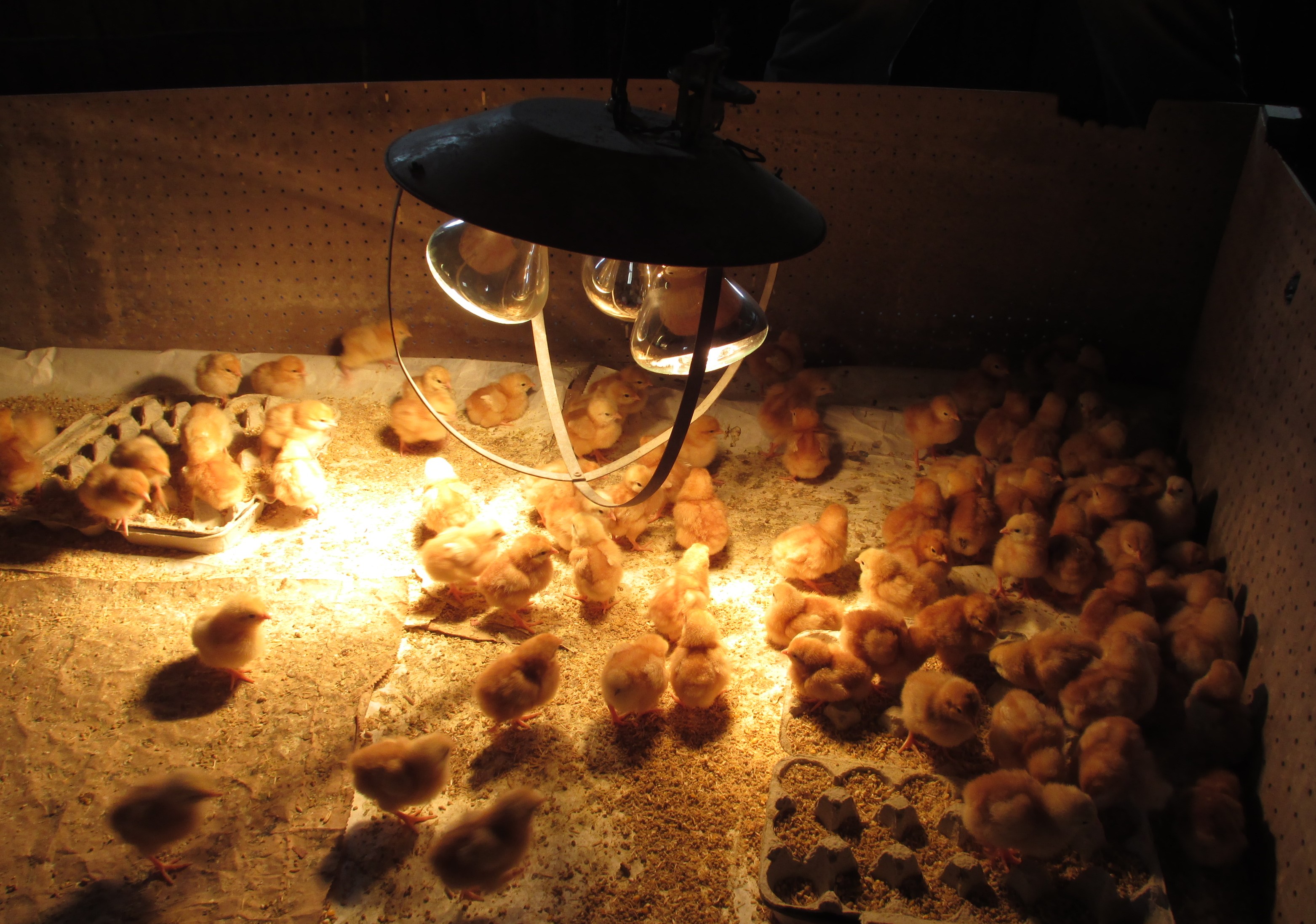
brooder lights, young chicks, brooder house, heat lamps,The interesting thing about the lights is that when they are shining during the day, it is very difficult to notice them.  But during the night, it is clear to us whether or not they are shining.  The same amount of wattage shows in the day and in the night, but the light is more easily seen in the darkness.

Jesus made the statement, “I am the light of the world.”  The Bible says in John 1:4, 5, “In Him was life; and the life was the light of men.”

Jesus, the Light of the World, is always shining into our world.  He shines when we think we can see into our future and things look pretty good.  He is also shining when we cannot see for all of the darkness that clouds over our lives and when we don’t see a good outcome to our future.  Just like the lights in the brooder house, He is shining.  Yet He can be spotted more easily in the dark.  Whether your life in easy now or you are hemmed in by darkness, look for Him.

Hint: Look for Him in the Holy Bible.

sketch by Wenda Grabau
photo credit:Wenda Grabau

Hand Signals

Traffic sign, tractor and farmer silhouette, tractor, As we work on the farm, we must drive to the fields with the tractor.  We live on the curve of a paved road.  Semi-trailer trucks, vehicles pulling horse-trailers and cars pass by the farm.  Many of those who drive through our countryside understand farming.  However, there are those who do not.

I recall when I was a young driver, how hard it was to come up behind a farmer and his machinery.  I lacked confidence in passing, so I trailed the farmer until I was sure there was clear road ahead.  Yet not all drivers shared my timidity or caution when having to pass a farmer on the road.  Some easily took the chance and sped on by.  Some may have grumbled as they applied their brakes when passing was not safe.  I know it is hard to enjoy following a slow-moving vehicle.  But prudence ought to win the day.

There have been many times when my husband has had to drive that road during his workday.  In the summer, it is especially tricky getting home safely.  Often when he has to turn left off of the road to turn into the farm, some impatient drive tries to pass him right by our driveway.  My husband has had quite a few near misses.  I guess the Lord has been watching over him.

One time, before he turned left into our driveway, he signaled by extending his left arm.  His arm pointed straight out from his shoulder to the left.  That, you may recall from your driver’s ed course, is the proper hand signal to use when turning left.  A driver crossed the yellow line on the tractor’s left just as my husband attempted to turn.  Suddenly the car driver slammed on his brake.  Through his open window he yelled, “Hey, I thought you were signaling me that the coast was clear and that I could pass.”

Both drivers parted peacefully and safely from each other that day.

But that brings up the question, “Do drivers really know their hand signals?”

I hope you know them.  They could come in very handy when you happen on some slow-moving vehicle.  It could also serve to keep you safe as you travel.


Currant Happenings

red currants, currants, currant bush,Our ancestors on Heritage Farm planted currant bushes.  They are now in a grove of tall trees that have overgrown them.  The bushes are nearly hidden from view.  However, my daughter found a handful of ripe currants there yesterday.  Though the currants are few, they provide us with a once-a-year treat, currant buns.

Today we baled hay, but this morning I started kuchen dough and folded in the currants.  The dough rose nicely; just enough for me to shape the buns before red currants, Hand full of currents, Hand full, berries, hands,my husband came in for lunch.  My daughter had just enough time before she left for the field to bake the little delicacies.

The buns are such a treat!  Yeast buns have a welcome aroma.  The currants’ delightful orange color and  tangy, tart flavor invite us to indulge on them.  Sweet cream butter and honey give the final touches to this unique part of our diet.

Currant buns, , buns, home-made buns, honey, raw milk, milk, butter

It's Yummy!

If you get a chance to raise currants, I encourage you to use them to make excellent jelly and buns.  Mmmm, Mmmm.

photo credit:Wenda Grabau
photo credit:Bretta Grabau

The Garden

garden, PVC fence, hay wagon, Traditions grow sweeter as the years go by.  We have perpetuated several for our children.  One tradition is the vegetable garden.  We work it and fertilize it every year.  Weather permitting, we plant it by Memorial Day.  This patch of ground lies near the farmhouse and has been used for years.

Its lush greenery provides many fresh vegetables to sustain our hearty appetites.  We plant radishes, cucumbers and lettuce.  We grow strawberries and sweet corn for freezing; tomatoes and beans for canning; popcorn and herbs for drying.   We also raise the keepers like winter squash, potatoes, carrots and beets.  Not only is the gardening passed on to the kids, but also food preservation.

My husband and son especially look after the cultivating and weeding that are needed, but from time to time they share the job with Sweet corn, tasseling corn, corn stalks, corn patch, garden,me and our daughters.   The preserving is generally for the girls and me.

Not only do we enjoy the garden, but so do the pests.  Animals, such as moles or rabbits, attempt to move into our territory.  Once in a while a stray chicken finds its way around the fence which barricades the hens from this produce bonanza.  The unwanted visitors get “shooed-off” by one of the family or by our handy farm dog.  Garden intruders are a nuisance.  Unwanted though they be, I am so glad that none of them is harmful to me or my family.

The garden is a fine place on the farm.  It rewards us with fresh foods and exercise.  In it we find time to see and hear the sights that the Lord has created in the country.

Photo Credit: Wenda Grabau

Photo Credit: Bretta Grabau

Raspberry-Time Again

We got the first picking late last week.  The second picking came yesterday.  What a help it is to have my daughter here to help with the harvest.  She picks the red raspberries while I cultivate and weed the vegetable garden.  When she finishes she cleans the berries.

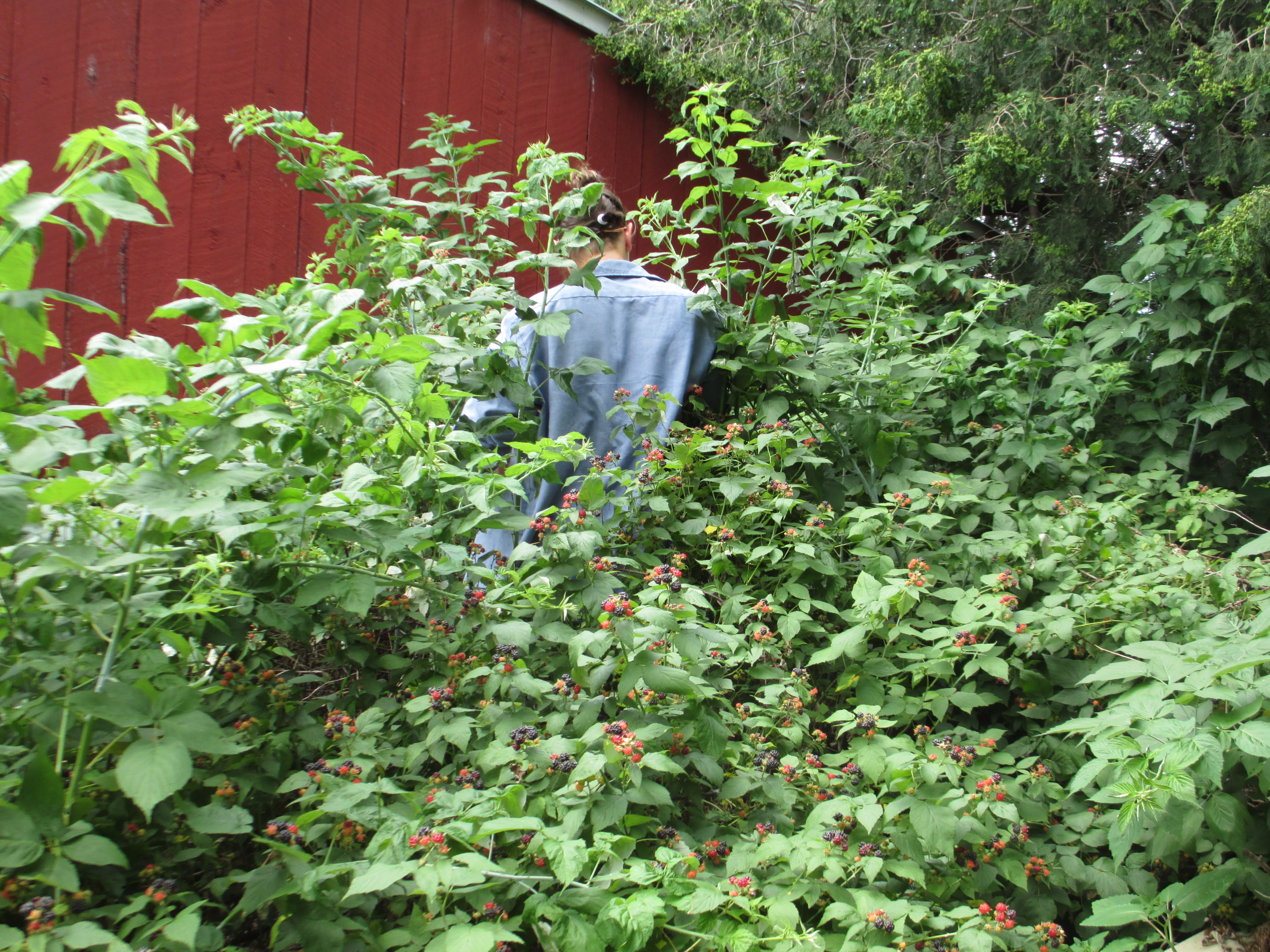
brambles, Black Raspberry patch, Black raspberry bushes, Picking berries, Weeding can seem like a passive activity to some, but, on the contrary, activity abounds. Birds sing and a few flies buzz around my head as the sun rises higher and hotter.  Our mother cat purrs at my feet as she attempts to lie down in the very row I am cultivating.  The humidity makes the temperature more oppressive as I work.  The weeds are growing very well.  I have worked hard this year to pull them.  I find a good place to stop my work in the garden and go rest indoors to eat breakfast with my husband and daughter.

Berry bugs are not a big problem at this time of the harvest.  At the end of the harvest we will need to be vigilant in ridding ourselves of the raspberry bugs.  At this time we have only seen a few in the red raspberries as we clean them.

We have a black raspberry patch that is also ripeningThey are a brambly bunch of plants.  Even in the heat of the day, my daughter and I must wear long-sleeved shirts to protect ourselves from the thorns that seem to reach out for us as we pick berries.  We took black Raspberries, Wild black Raspberries, raspberries, Raspberry plants,time to pick them today, too.  Since the patch is small, we can not predict how many we will get.  Yesterday we got 2 quarts of berries.  That is enough for one batch of jam and lots of good sauce for shortcake.  We have at least the same amount of berries still on the bushes for another batch of jam and maybe a pie.

Last year we planted a new small patch of yellow raspberries.  The plants look healthy and have some berries ripening for us.  We can only get a couple of handfuls this year.  But it will be a treat to taste them.  Maybe next year will give us enough to preserve or share.

photo credit: Wenda Grabau
photo credit: Bretta Grabau

Crimping, Raking and Baling: The Long Day

The day began for me at 5:30 AM.  The sun had risen and came up behind the grove and the old red-brick school house just east of the farm.  My husband hitched the conditioner to the tractor.  I hopped into the John Deere 2520 tractor seat, revved up the motor and was off to start my work as my husband finished his chores before he began milking the cows.

I pulled out of the driveway onto the paved road that led to the hayfield.  As I accelerated the cool air pressed against my face.  I drove to the field to crimp the hay that had been cut a day earlier.

As the hay is fed through the conditioner it is crimped.  The crimping breaks the hay stems in several places.  The extra breakage provides for the hay to dry more quickly.  In view of the rainy trend we had been having, we needed to speed up the drying.  We wanted this hay to be ready for baling tomorrow.  That job took 2 hours to get done.

hay, hay swathes, alfalfa hay, hay field, raked hay,At 8 AM, I returned to the farm and had a quick breakfast.  When the milking was finished, my husband and I were off to the next field.  He drove the John Deere B pulling the hay rake to the field of dried hay.  I followed in the farm pickup.  My husband started raking, left me with final instructions and took off in the pickup for the farm.  He took the tractor and the haybine out to cut a fresh crop of hay.  I finished the raking.

We finished by 12:30, just in time for lunch.  We ate heartily.  He greased the baler and hitched it up to the tractor.  To the B, he hitched up two hay wagons.  I washed dishes.  Upon finishing, I donned my straw hat and headed out the door to start the baling.  I put gas in the 2520, hitched it and the baler up to another wagon.  We were ready!

John Deere tractor, tractor, baler, square baler, New Holland baler, making hay, baling hay,I drove.  My husband rode the wagon and stacked the bales.  After we baled the first load, my daughter came to relieve her dad.  He took the loaded wagon to the farm to unload it, while our daughter and I filled the next loads.  Our son was on hand to help unload bales at the farm.  We made about 14 loads that day.

My daughter and I finished baling and bringing the loads home by 8:40 PM.   Fortunately the sun was still up so that we could safely take the machinery back to the farm.  My husband had to milk cows in the evening so we left 4 loads of hay that did not get unloaded.

The long day was tiring, but very rewarding.


Photo Credit: Wenda Grabau

Who is in Charge of the Weather?

green field, flooded barn yard, barnyard, farm, rainy weather,This spring has been a continuing challenge.  The cold and snow stretched on into May.  Had it been a normal spring, the oats would have been drilled into the ground by mid-April.  Yet it took till May to get that job accomplished.  Again, for our area, the goal is to get the corn in the ground by the end of May, but the continuing rains kept farmers out of the fields.  Some folks like us did not get the corn crop planted till mid-June.  We had to settle for planting 3/4 of the crop that we had anticipated. We just ran out of time to plant corn.  The farm schedule has been altered many times.

Farmers have had to consider the shortness of the growing season with the time it takes a crop to mature.  If the season cannot support the time it takes for a crop to mature, then farmers must reconsider what they will raise.  For our farm, we are raising more oats rather than the corn we had expected to plant.  If indeed there is a need for extra hay by mid-summer, we can bale the immature oats and use them this winter for the cattle.  If our hay is abundant by mid-summer, then we can opt to let the oats mature for cattle feed or a cash crop.  Oats need a shorter amount of time to develop and will work with the time we have left in this growing season.

Today is June 30, and we have only been able to cut and bale hay three timesWe need to cut hay five more times for the first crop.  Rain has been the prohibiting factor.  We need good quality hay for cows to produce milk well.  Due to the January thaw, we have unfortunately suffered a good deal of winter-kill for good-quality alfalfa hay.   Hence, the hay we do have ought to be made on sunny days.  Hay needs 2-3 consecutive sunny days with good conditions to dry for proper baling and storage.  That is why the rainy conditions this May and June have made it so difficult.  Rain on hay causes it to lose nutrition.  We want to avoid that.  We normally expect to have all of first crop hay finished by July 4.  It will be a very hard to make that goal now.  It is still possible, but if the weather pattern does not shift to more sunny days, it will be hard to accomplish.

The Lord is in charge of the weather.  We will wait on Him to see how He works all of these things out.  “Wait on the Lord and be of good courage and He shall strengthen thine heart.  Wait, I say, on the Lord.”  Psalm 27:14.

Photo Credit: Bretta Grabau

Awake from Slumber

spring flowers, wild violets, violet, grass,

Pretty violet faces peek at the sun from a carpet of green.

At long last the farmland awakes from its slumber.  The farm sheds white snowy robes, to don its verdant hue.  Tucked in the green blades, violets peek out to cheer the passer-by.  The grass itself has come alive.

Perennials poke their rising heads from the flowerbeds.  Crocuses shine their brilliant white smiles reflecting their resurrected glory.  Lilac buds swell.  Red globes of rhubarb rest on the soil ready to send forth leaves.  Prickly raspberry canes put forth green leaflets and send out new plants.  Tulips and daffodils emerge with the promise of vibrant color to awake the senses.  Renewal has come.

spring flower, crocus,

Crocus Awaking in Spring

Sounds in stereo fill the ears.  Blackbirds trill, robins sing, sparrows chirp the glad tidings of spring.  The shrill call of cardinals splits through the air.  Wind blows majestically through budding tree limbs.  Thunder rumbles to announce life-giving rain.  Indeed, the sounds of spring have come.

The sun’s rays thaw and warm the soil.  Farmers can at last navigate over the field’s clods to ready it for planting.  Fertilizing, dragging and disking get the ground in readiness for its life-giving labor.  The earth, it, too, is awakening.

earth, fresh-turned earth, plowed field, grass, un-plowed field, field work,

Field work commences.

In sight, sound and warmth, O Man, awake from thy slumber to behold things that God Himself is doing.

photo credit: Wenda Grabau

Introducing “Shamrocks”

Card Available in our Store

Shamrocks are a favorite plant on the farm. 

My maternal grandmother displayed a lone shamrock plant in her home when I was a youngster. 

My mother got an offspring of the plant to raise in her home

I now have the offshoot of that plant in mine.  I am raising plants to give to my children and others.  

I put the potted shamrock plants outdoors in the spring and summer where they do very well with God’s rain and sunshine and fresh air.  Bulbs reproduce in the soil and new plants come handily.  Hardy green leaves make a colorful backdrop for the cheery pink bloomsBefore the frost, I bring them indoors to await the winter’s passing.

I thought you might enjoy the spectacle on a note card.  It is now available through our storeCheck out the new introductory sale price!

Naming Jack

As a part of my good-natured coping mechanism, I thought I would make my calf-time a bit more interesting.  I sought to converse with the calves.  Now, one cannot really talk with a calf, but one may talk to one.

calf, holstein calf, calf pen, calf shed, straw,

Curious Little Calf

Therefore, I decided that each one should have a nickname.   If one had a unique pattern on his/her face that might trigger a name like “Checker” or “Wolfy.”  Some calves got their names from their location in the shed, such as “Corny” who lived in the corner.  And then there are others who got named by some characteristic in their personalities.

calf food, raw milk, milk pails, One such calf repeatedly jumped out of his stall in his eagerness to be fed.  A time or two I was successful at putting some calves back in. The calf had to be lifted or helped to jump back into his stall.  But this calf was different. He was not to be distracted from his goal, the milk.  I could not get him to jump back.  I could not serve milk to the other calves while he was hanging around the milk pail.  He would drink it all.

I needed help.  To save the milk from this calf’s advances, I put the milk pails outdoors while I found my husband and got his assistance.  He easily got the calf in the stall.  I fed him and that was that.

The next time I did the chores, I began the feeding process and out jumped that same calf.  I, again, summoned my husband for help.  This scenario could not go on.

The next time I went in for calf chores, I noticed a change in scenery.  My husband had placed a spare stall door over the top of the calf’s stall.  It was tied in place by baler twine.  Problem solved, we thought.

I turned to do the work and sure enough the calf popped out of his stall.  The lid turned out to be on top of the wrong calf!

jack-in-the-box, toy,I decided then and there that the culprit needed a name.   That day, my husband built a ceiling over his stall.  It was high enough that it would not hurt his head and it gave him room to grow.  His name became Jack-in-the-Box.

photo credit: Wenda Grabau
photo credit: Bretta Grabau
photo credit: timlewisnm via photopin cc

Page 9 of 15« First...«7891011»...Last »