Archive - Fresh Off the Farm RSS Feed

Terror in the Farm Yard

white rooster face, rooster face, white rooster, chicken, white chicken, white chicken face, rooster,Many young children have roamed this farm yard over the generations.  In it, my girls have happened on aggressive animals now and again.

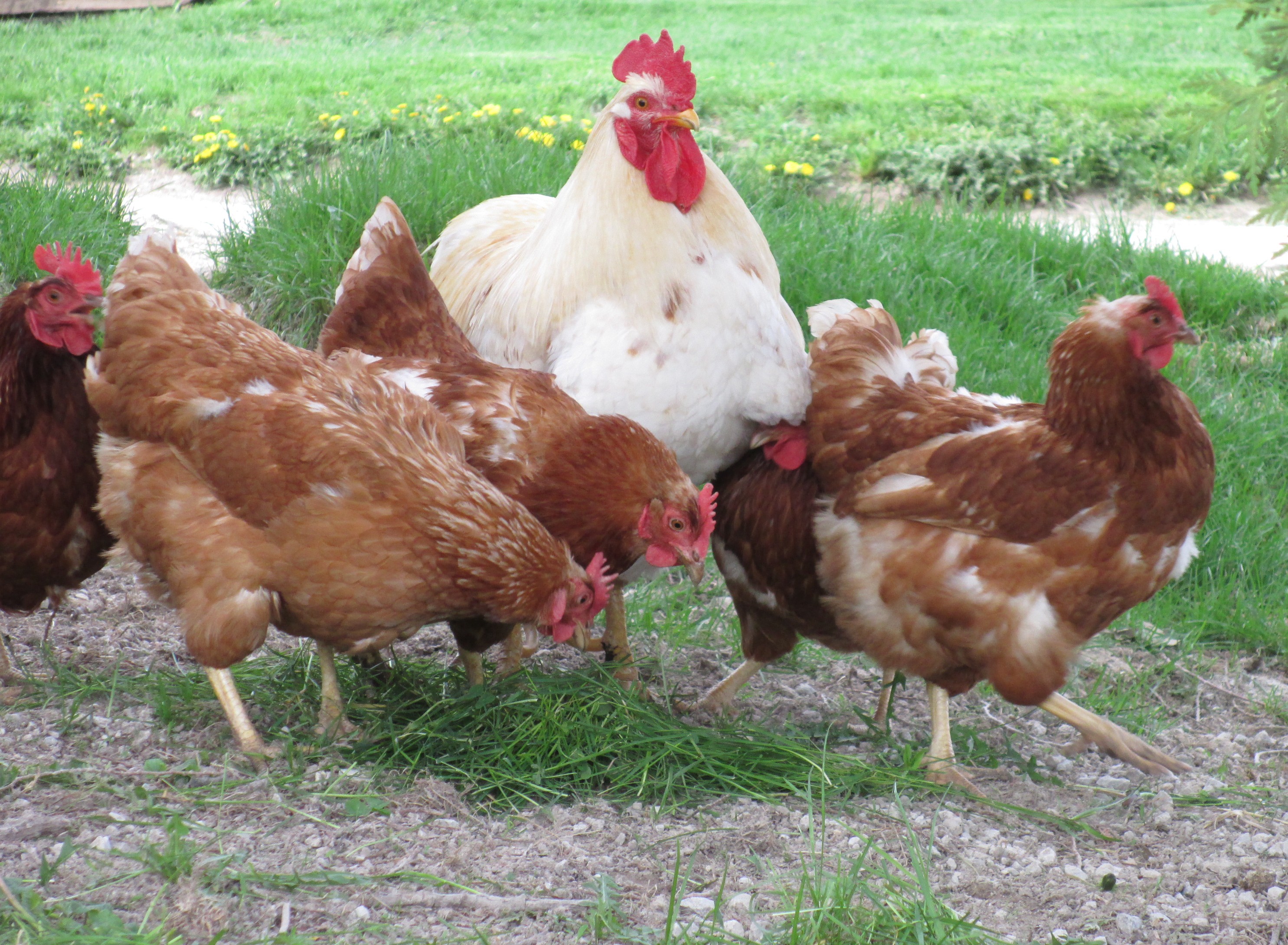
When my youngest daughter was fourteen years old she would walk to the calf shed and be accosted by Terror, the rooster.  He was protective of the hens to a fault.  He charged after her and her sister many times.  Our older daughter had the job of mowing grass back in rooster territory.  Terror took that as an insult and flew at the mower and its operator many times, spurs flying.  He had a very scary reputation.  The girls avoided him as often as possible.

One sunny day we will remember, Terror used his masculine ire effectively and appropriately.  My husband related this incident to us with a chuckle. Terror escorted the hens across the calf yardAs they came to the center of the yard, 500-pound calves came running full tilt to the feeding troughs.  Terror and the hens were between the running cattle and their food.  To allow the hens to scatter to safety, Terror dug in.  He stood beak to nose in front of them and ruffed out his neck feathers ready for a fight.  This startled the cattle so that they stopped-on-a-dime.  The staring contest continued peacefully till Terror strutted off the calf yard and went on his way to the chicken yard.  Terror, the five-pound rooster, won the day over 5,000 pounds of beef!

There comes a time in a rooster’s life when life comes to an end.  And Terror was no exception.  He died and a new rooster was promoted to take care of the new flock of poulets.

The girls feared this rooster too, but to their amazement he had more docile personality.  This one we called a Good Old Rooster. But for good or ill, we will always remember Terror.

photo credit: Svadilfari via photopin cc

An Afternoon with a Carrot

We cleaned out the garden yesterday. Root crops, squash, herbs and flower bulbs came out of the garden on their ways to the cellar for the winter. The chilling air nipped at our fingers as we dug carrots, beets and flower bulbs.

A carrot with 3 roots, smile, blue eyes, green wig, carrot leaves,

A Carrot with Personality

Rains, the day before, mixed with the garden soil to make a fine mud that clung to our shoes as we worked. The mud stuck to uprooted plants, vines, and vegetables.  We took the greens off of the carrots and beets. We sprayed off the mud with the garden hose.

We put the air-dried beets, carrots and squash into wire baskets and brought them into the cellar for storage.  While packing them into the baskets we discovered a rather unusual carrot.

It looked like a little marionette.  So to complete its look we spent time this afternoon giving it a personality I hope this little guy brings you a smile.  If it does, our afternoon with the carrot will have been well worth it.

Have a great day.

photo credit: Bretta Grabau

Cleaning the Garden

beets, red beets, garden produce, beet greens,Much work and waiting have gone into the garden again this year. As days shorten and temperatures lower, it is clear that winter is coming, the growing season is past.

Our wood supply is abundant, but it sits in a woodshed beyond the garden. To get it into our wood room, my husband loads the firewood on the tractor loader, drives across the garden to the wood room door. Hence, the garden must be cleaned before it is turned into the tractor path.

We took up the squash and cucumber vines and collected their fruits. We pulled up the herbs. We pulled out the beet crop and the carrot crop. The broccoli plants had to go, too.

carrots. garden produce, carrot leaves,My gladiola bulbs have to come out. They would die with the freezing of the earth, so we got them in.

We cut the tops from the carrots and beets.  Carrots must have bit of the orange cut off with the greens, otherwise, in storage they tend to grow new leaves.  The beets are trimmed with about 1 inch of the stems still on the beet.  If beets were cut more closely they would lose some of their deep redness during cooking.

The cut-off tops went to the chickens.

We washed the vegetables, air-dried them and packed them into wire baskets before storing them. Carrots are stored in plastic bags and kept in the cool cellar.  Beets are stored in a crock as are the squash.

The garden is clean enough to let the tractor do its job tomorrow when piling wood will be on the docket. When the hard freeze comes there will be time to finish.


photo credit: Bretta Grabau

Comparing Apples

White apple blossoms, apple blossoms, apple tree,

The Fruit Beginnings

In botany, I learned that fruits differ. Apples and pears are pommes. Pommes reproduce themselves by blossoms. The ovary of the blossom houses the true fruit of the plant...its seed.

We tend to think that the flesh of the apple is the fruit.  That is not so.  The developing ovary of the blossom gets fleshy and sweet.  As stated above, the true fruit of the plant is its seed.  The seed will reproduce itself.

With that little science lesson behind us, let me tell you of my current project. Our apple trees continue to bear. I have one wire basket and 1/2 of a bushel basket full of apples to process. They have enough food value for us that I will save as much as possible. Yesterday I made a nice batch of applesauce in my crock pot. It takes 5 hours to cook enough to make a nice chunky sauce and the crock pot has not scorched the finished product. I like that. I will finish working with the apples as soon as I can. Working with apple after apple I make some observations of how they parallel with truth.

apples, red apple, yellow apple, blemished apple,

Outsides differ with cores and seeds within.

While I sat at the table busily peeling the apples, I noted that every apple is not the same. Some are bruised, while others are firm. Some are large and others are small. Some are pretty and inviting, while others look tough and unappealing. Yet, regardless of their outward appearance, the apples all have seeds. You will recall that the seed is the real fruit.

That truth brought me around to thinking about how people are like these apples. We all look different. Some of us are not as attractive as others. Some of us are not as young and thriving as others. Yet there is still an inner part of us that remains in each of us forever. We each have an eternal soul that will live on forever. It has such value that the eternal God sent his Son, Jesus, to earth to make provision for our souls to live eternally with Him. By his death on the cross for our sins, if we believe in Jesus, He gives us the right to become his children. (John 1:12)

I am so glad that outward appearance does not determine our value.  It is the condition of our hearts and soul in relation to Jesus that matters. Put your trust in Him. Believe in Him.  Your heart and soul matterGod wants to have you for His child.

photo credit: Wenda Grabau
photo credit: Bretta Grabau

The Tradition

Horse teams, team drivers, Minnesota state corn husking contest,

Horses await the start of the contest.

Family traditions come wrapped up in many packages. This one has its roots in a sporting event in 1941. It has come down through the years and has touched several lives in our community along the way.

The farm technology of 1941 looked much different from that of today. It included workhorses pulling wagons. The corn wagons came equipped with a bang board mounted on one side. Bang boards served to “catch” corn ears that were tossed by hand into the wagon.  Corn ricocheted from the board and fell into the wagon bed below. The person picking corn most often used a hook strapped to his hand.  The hook dragged across the husks loosening them up, exposing the ear.  With a snap on the stem end of the cob, the ear was free to be tossed into the wagon. Things have certainly changed from the old days.

In 1941, my husband’s dad joined in a county-wide contest…a corn husking contest.  The object of the competition was to pick as much weight in corn during a fixed time period as the picker could.  Besides that, the corn had to be kept as clean and free of husks as possible.  Penalties discouraged the excess weight due to attached corn husks. This fun sport ran deep in the veins of many young men from the farms.

With WWII, advances in technology affected even the farmer.  Tractors and other machines were developed to add speed to the planting, harvesting on other jobs on the farm. The one-row corn picker came on the scene.  Soon farmers did not need to husk corn by hand. Hand corn husking contests dwindled and disappeared.

Yet in the 1980s, my husband’s dad discovered that a revival in corn husking had emerged. He wanted to be a part of it. He went to observe one contest and joined in the fray. His corn husking days had been resurrected! What fun he had that day. Pleasant memories of the old days resurfaced and refreshed him. He shared his joy with family and friends in his renewed love of hand corn husking.

My father-in-law took time to teach us how to husk corn.  With his encouragement we competed, too.  My husband and I took our young family to some of the contests. Just last year, my own young grandchildren got a chance to learn and be a part of this family sport. This is one special way we pass on traditions here on Heritage Farm.

The corn husking wagon is featured as a card in our store. Other cards from the old technology, the plow and the spreader are available there for you to enjoy.


Photo Credit: Bretta Grabau

A Souper Day

Water tub, red tomatoes, stalk of celery, celery,

Big Flavor in Soup: Tomatoes and Celery

One staple crop I grow in the garden is tomatoes. We like to raise about a dozen tomato plants each year. I make canned tomatoes, soup, salsa, and sometimes pasta sauce. In winter, tomatoes greatly enhance our diet.

Stainless steel kettle,

Kettle Easily Holds 8 Quarts.

Recently we had a nice bunch of tomatoes to process. Judging from the count of jars of soup on my shelf, I decided to make a batch of soup. The recipe I like to use requires 12.5 pounds of tomatoes to make about 5 quarts of soup.


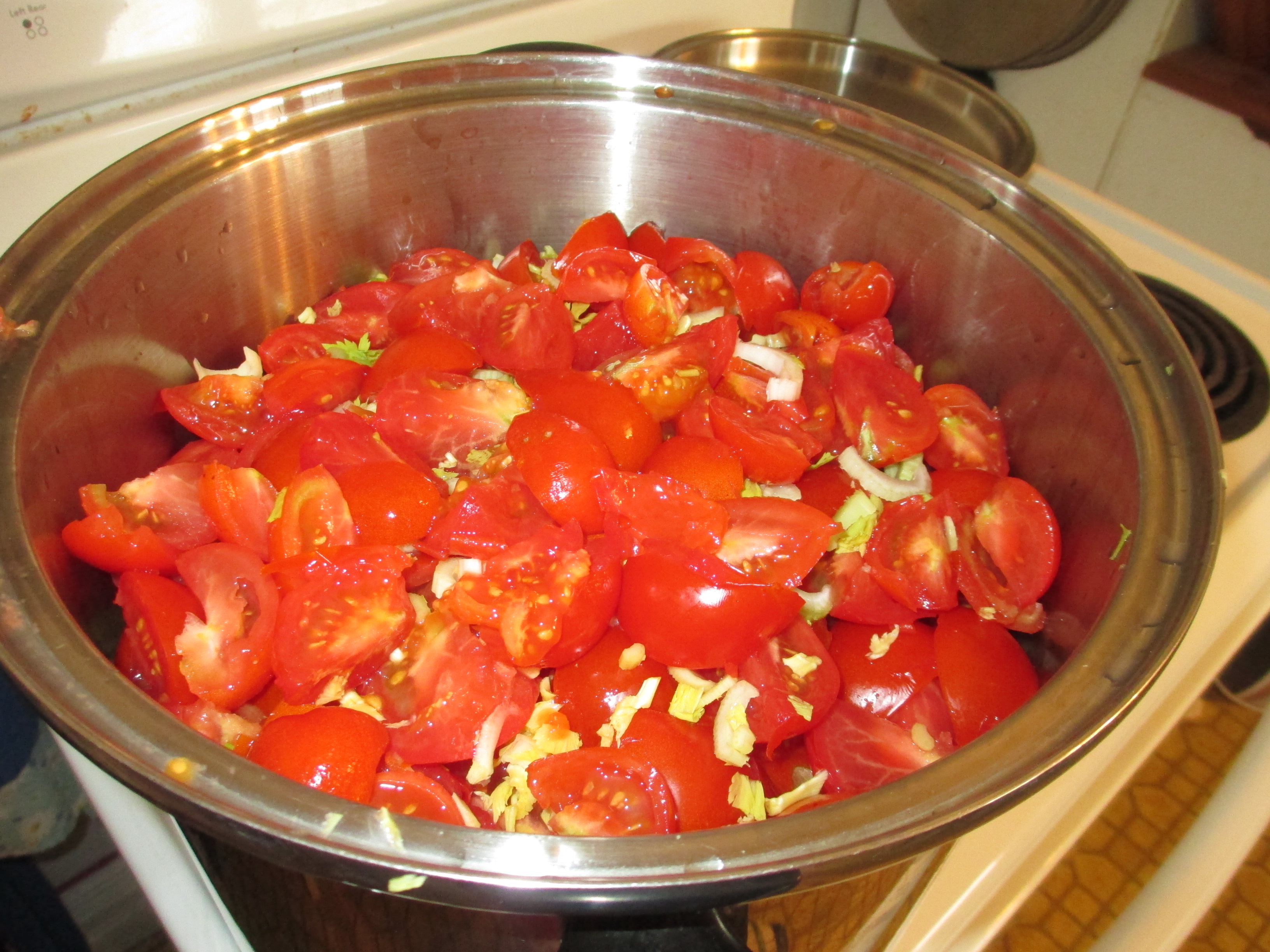
I wash my tomatoes and celery before I put them into the pot.  I cut out the stem end of the tomatoes and cut the tomatoes in quarters. The celery is cut in half-inch pieces. The pot must be large enough for the bulky vegetables. I prefer a stainless steel one.

stainless steel kettle, red tomatoes, celery,

The Starting Mixture


1/2 teaspoon of garlic powder, 1-6 chopped onions and/or basil may be added at this time for added flavor.


Red tomatoes. stainless steel kettle, wooden spoon,

Stir to Prevent Scorching


Stir the heating mixture often.  I like to use medium heat to avoid any burning.


Squeezo-Strainer, tomato soup,

Juice Saved in One Container; Solids Discarded


Once the tomatoes and celery are softened, the next step of the process is straining.  I use a Squeezo-Strainer. I use this tool for tomatoes and applesauce especially.


Jars, canning jars, home-canned tomato soup, home-canned soup, Pickles, peaches, applesauce and apple juice in bachground

Jars of Soup Stored in the Cellar


I wash up the kettle and pour the strained juice in it. I add 2 sticks of butter, 1 cup of sugar and 1 cup of flour, 1/4 cup of salt to the juice mixture, and pepper to taste.  I use a whip to mix in the flour and to avoid lumping.  I heat the soup to the boiling stage till the mixture is thickened.

It is ready to pour into hot jars. Place on canning lids and screw bands and process in a water bath for 10-15 minutes.

When preparing to serve this soup, milk may be added.  To prevent curdling of milk, add a pinch of baking soda.

photo credit: Wenda Grabau
photo credit: Bretta Grabau
photo credit: Wenda Grabau
photo credit: Bretta Grabau

Tribute to the Good, Old Rooster

Gold Star rooster, Gold star hens, White rooster, red hens,On our farm, we keep a flock of laying hens. Presiding over the hens is one rooster. After the hens lay eggs for us for about a year we move them out making room for the new and upcoming flock. Most often the rooster moves out with his hens.

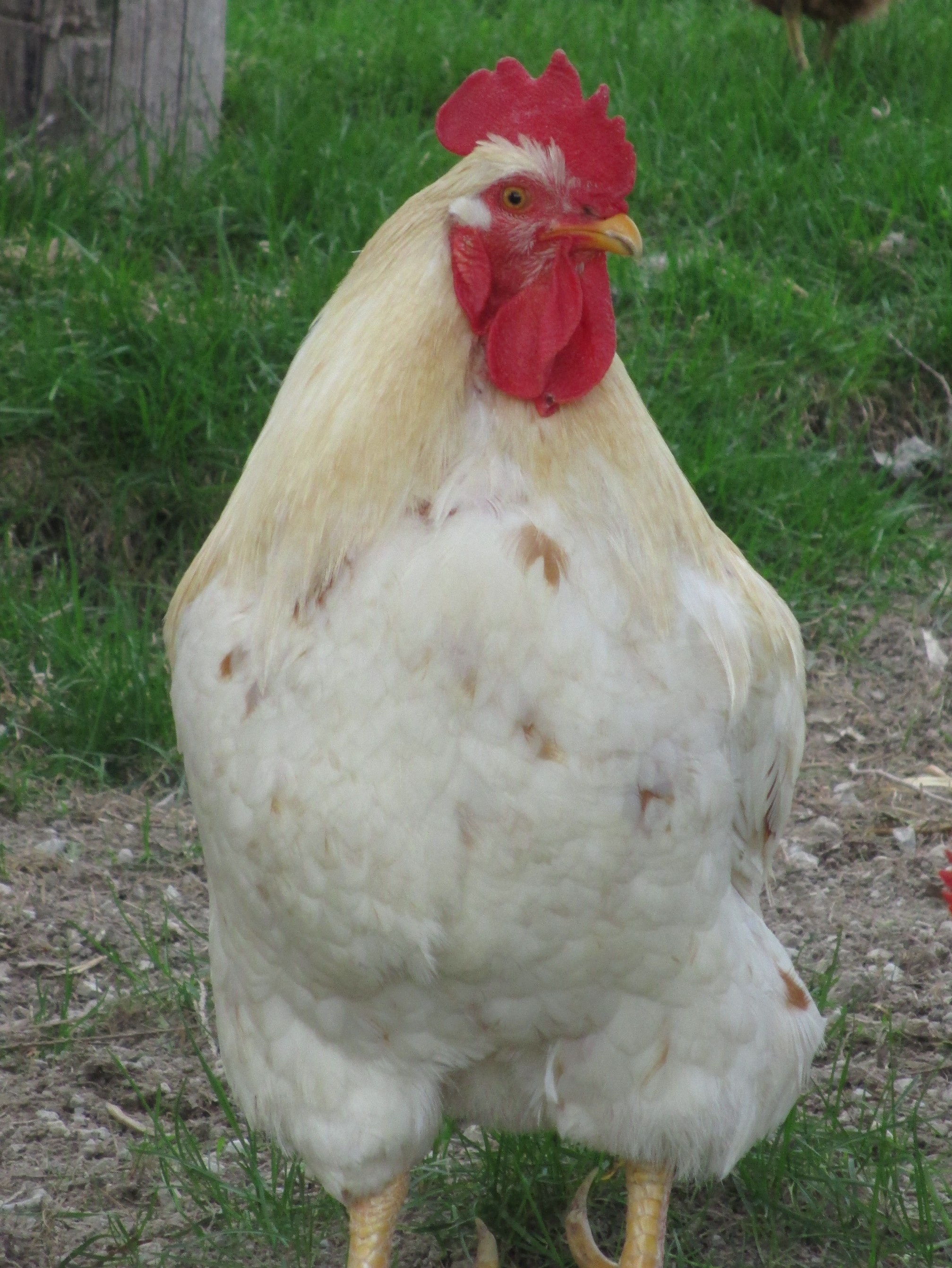
Our last rooster, however, stuck around. He was a big rooster, very protective of his ladies, and knew his territory. Many other roosters in the past tended to be of the arrogant, possessive type. They attacked human beings simply because they walked in or around the chicken yard. Some charged when they were in the “human’s territory”.

Mature white rooster, Gold Star rooster,

The Good, Old Rooster

Not so with this rooster. He protected the hens from coyotes, foxes, and raccoons, yet he knew that we provided food and shelter for the chickens, so he honored our authority. His attitude and demeanor were consistently trustworthy. For that reason he reigned in the chicken yard for about seven or eight years. Now that is a long time, if you recall they usually are gone in one year.

Last week, our good old rooster fought his last fight. He took on a fox to protect one of his ladies. His weapons in fight, spurs and beak, recently were reduced to single spur and beak. Yet he put up a good fight. But, sadly, he did not make it. We sure will miss that guy around here. It’s not often that we have found a rooster of his caliber.

photo credit: Wenda Grabau

The Great Turtle Rescue

Our dry weather gave us rest from mowing lawn for several weeks. Recently we got the blessing of rain. The grass began to grow all over the farmyard. Mowing had to be done. My daughter got the job.

Snapping Turtle, turtle Face,She had been able to mow some of the yard with a riding mower. As she mowed the highest hill in the yard, she saw a huge turtle at the bottom of the hill! She could not continue mowing with him in the way, plus she thought it could be a snapping turtle.

She bolted into the farmhouse yelling, “Mom, where’s the camera?  There is a giant turtle!”

She found it and raced out to tell her dad who was near by putting gas in the tractor.

I wiped my hands on my apron. I left my bread dough and made my way across the yard to see this giant.

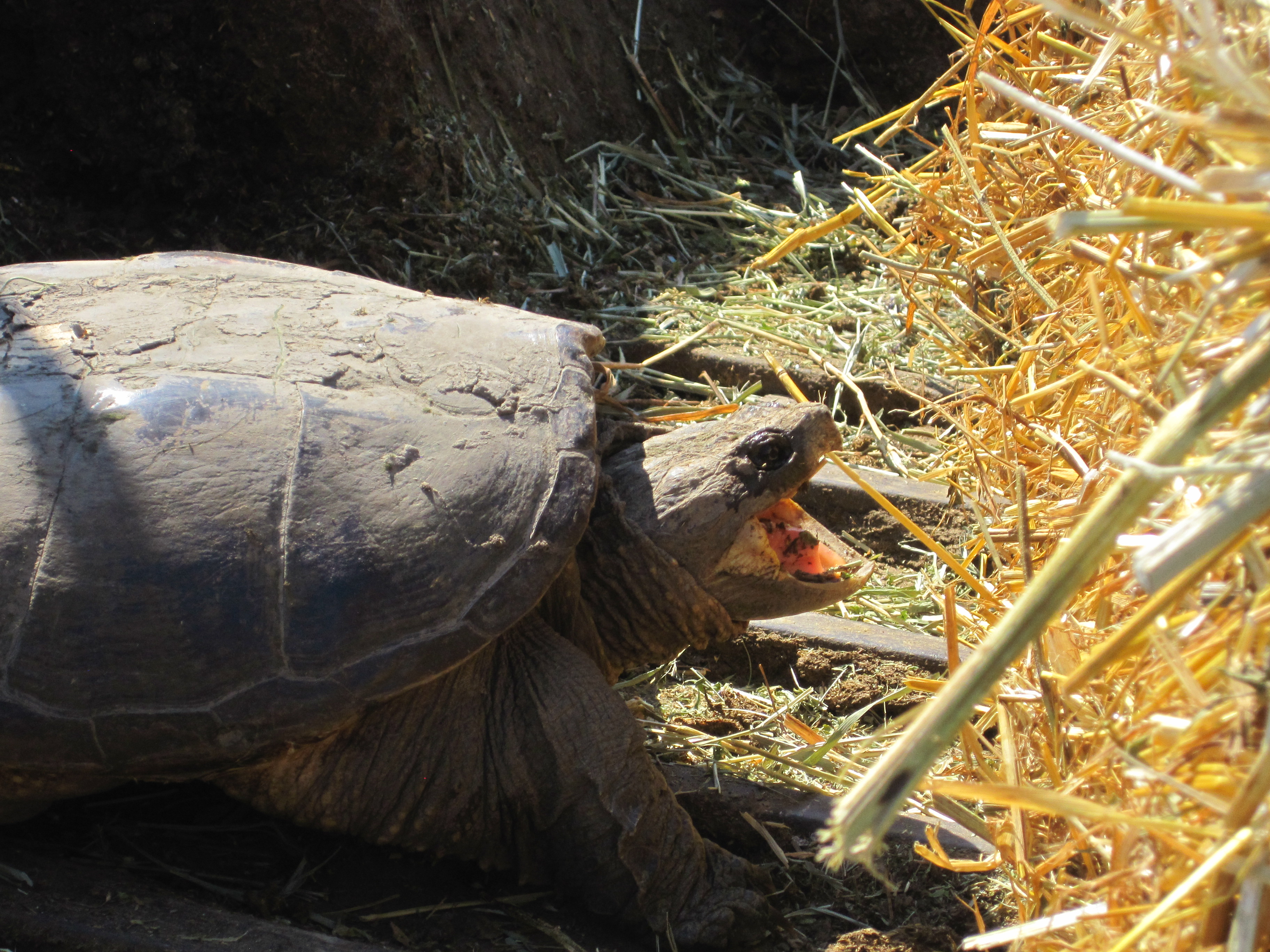
Snapping Turtle,Turtle Mouth,Sure enough he was big! We were not sure what kind of turtle he was until he snapped at a stick my husband used to try to move him. He did not like our attention, but he could not stay in the farmyard.

The turtle had mud baked on his shell. He could have been hanging out in a patch of mud from earlier rains. The snapper eyed us with contempt. As my daughter moved toward his back side, he pivoted to keep her in sight. He was not a very trusting creature.

My husband maneuvered Mr. Turtle onto the loader of our tractor so that he could be safely moved. Mr. Turtle resisted, but he got on the loader bucket in short order. My husband set a straw bale in front of Mr. Turtle to prevent him from falling off of the loader when the tractor was in motion.

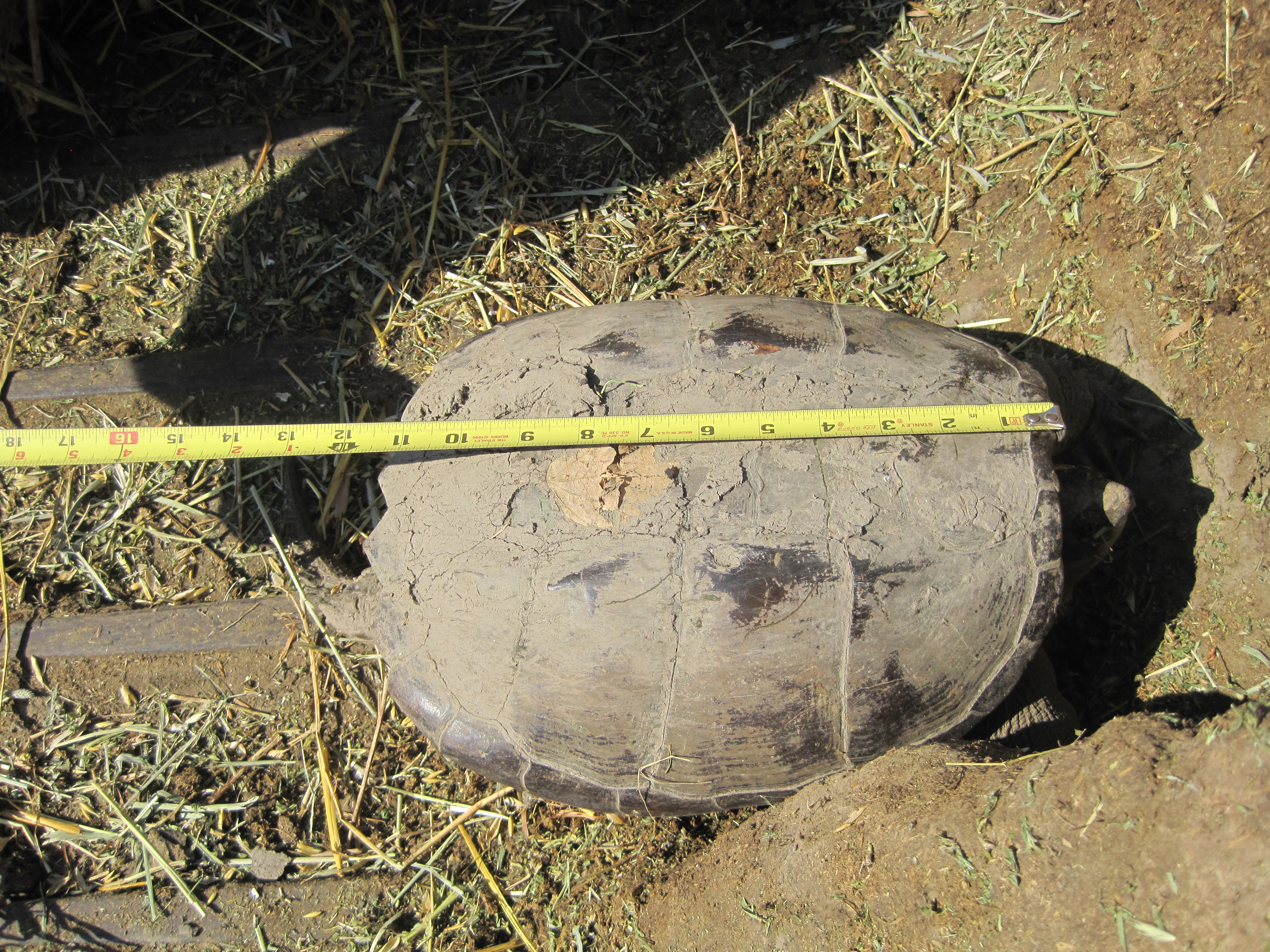
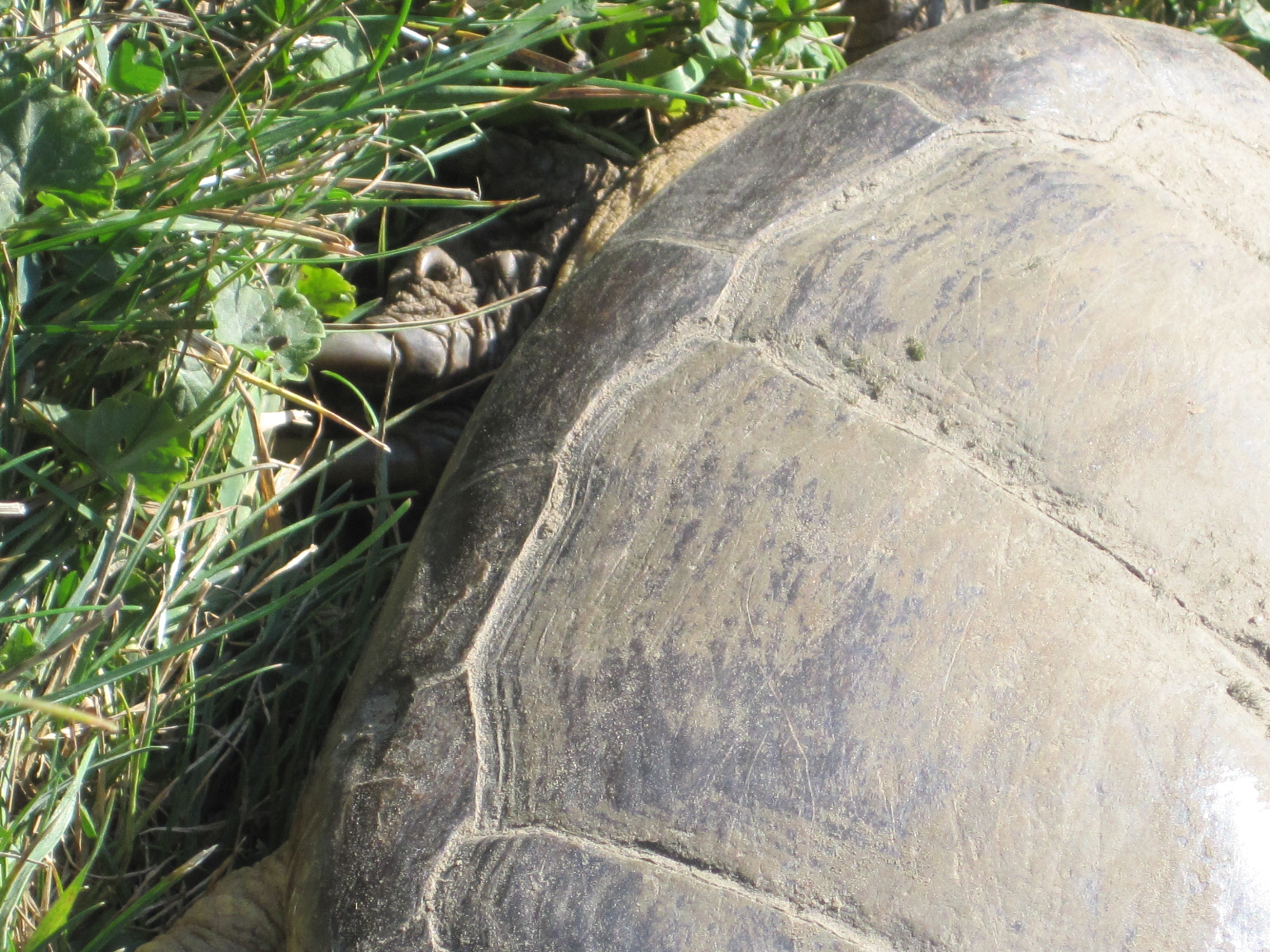
Turtle Shell, tape measure,Before freeing him, we wanted to gather some hard facts about him. To do that, my husband unloaded the turtle into a pail that was large enough for him to sit in comfortably. He took the container to the feed shed where a large scale is housed. The critter tipped the scales at 15 pounds. His shell measured approximately 12 inches long and 10 inches wide, his tail was 8 inches long, and his claws an inch long. His neck could not be measured safely and besides, he kept it tucked deeply inside his shell.

Turtle shell, turtle claws

Turtle With One Inch Claws

Mr. Turtle may not have enjoyed his encounter with us on Heritage Farm, but we found him interesting.

My husband took Mr. Turtle to a wooded area on the farm and let him loose to find his way in this world. He gladly scooted away into the underbrush of the woods. We don’t expect him to visit us again anytime soon.

Photo Credit: Bretta Grabau

The Four Generational Cabin

moss, cedar shingles, As you may already know, heritage is important to us on Heritage Farm.  One example of this comes wrapped up in a little log cabin built on the crest of a hill on the farm.

The cabin marked the bicentennial of the founding of our country.  Built in 1976, it has been a visual center of the farm.  It is easily seen by those who drive by.  Hence, maintaining it became a priority.

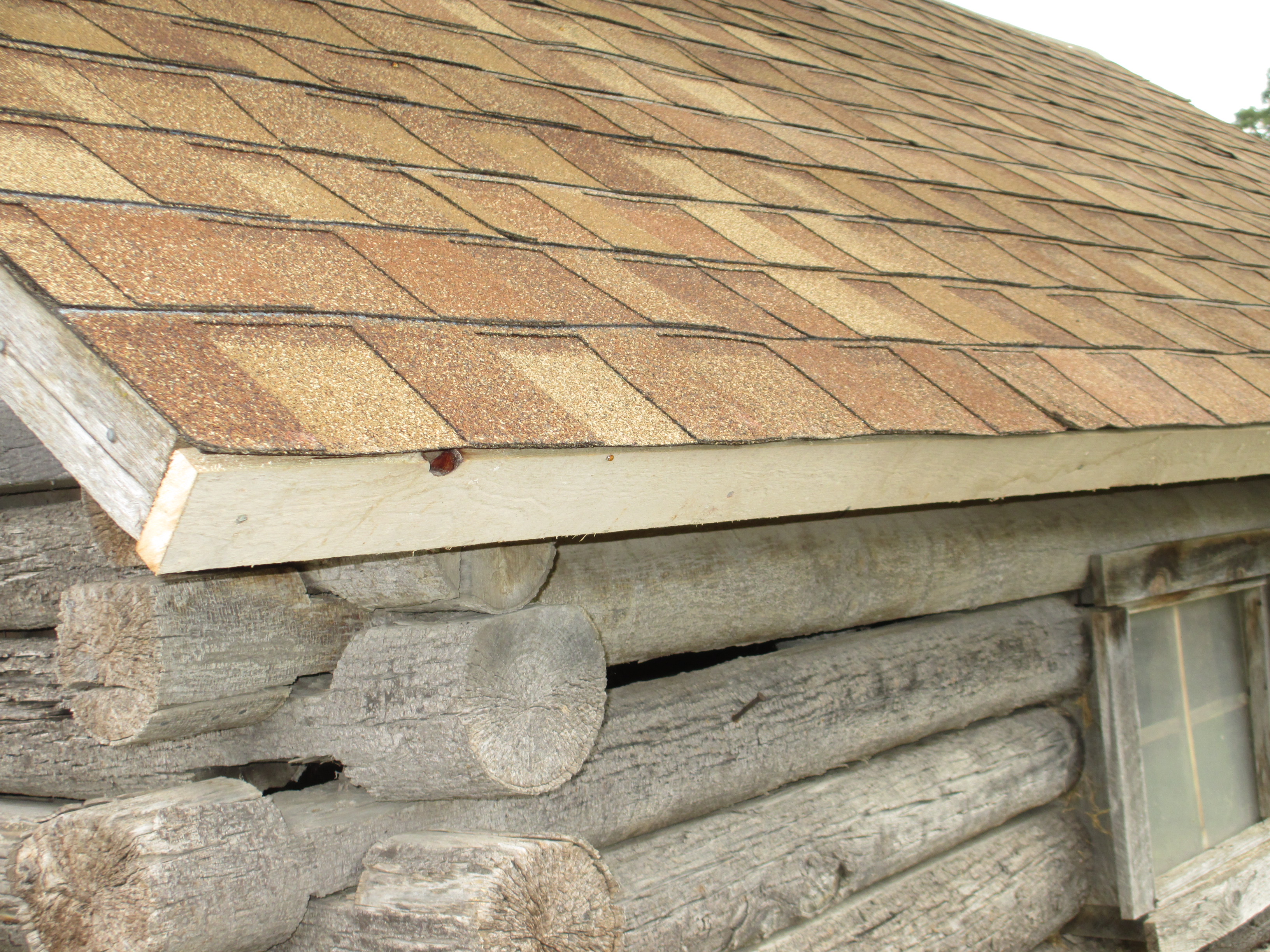
 tar paper, cedar shingles,re-shingling,The cabin was originally built by my father-in-law and my husband. My husband’s grandpa helped put on the shingles.  The gathering of the men to complete this project became a special memory for us.

When the cedar shakes began to fail, re-shingling became a necessity if the cabin was to be preserved.  Moss covered the roof.  Plans began to take shape to replace the shingles.

Recently, the time came for my husband and our daughter to fix the cabin roof in order to preserve it.  Because our daughter enjoys shingling, this became a great chance for the fourth generation to get involved in working on the cabin.

new shingles, cabin, log cabin,Old shingles were removed, new tar paper put in place and the new shingles nailed on the renewed roof.  The job took two afternoons to complete.

The “farmscape” is looking much better with the new life added to this old cabin we enjoy.

You can see our “cabin” cards at our store.

photo credit: Wenda Grabau

The Resurrected Morning Glory

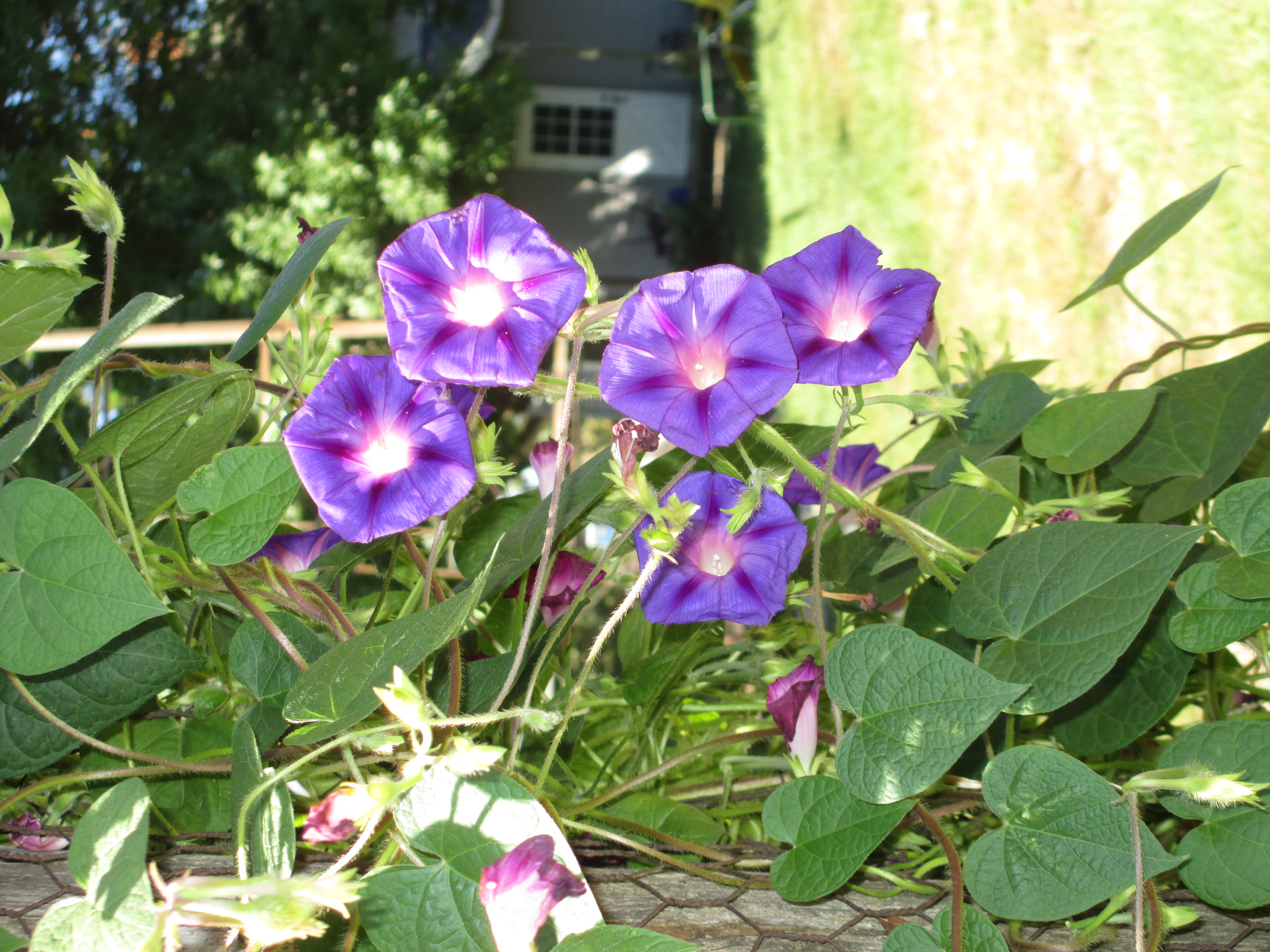
Morning Glory climbing electric pole, electric pose, morning glory,My mother-in-law lived on this farm before I did. She loved flowers and gardening. One flower she had adorned the rural electric pole in the farmyard.  The Morning Glory climbed that pole every year.  Its purple blossoms bloomed profusely.

Somewhere along the line after we moved here, the Morning Glory died off.  All that remained was the chicken wire my husband’s mom had mounted on the pole to support the plant.

Over the years we mowed around the electric pole and forgot about the Morning Glory.

One summer, the electric company sent linemen to do some work on our pole.  They dug around it and did whatever needed doing.  They finished their work and we forgot about it.

Purple morning glory, chicken wire, morning gloryLater that summer we noticed several clinging plants start to climb the pole.  We did not know what they were, but one fine day a bloom opened to the sun.  It was Grandma’s Morning Glory resurrected!

Apparently the digging the linemen did unearthed seeds that had survived and they could now grow and reproduce again.

We enjoy watching this flower grow and think of dear Grandma.

photo credit: Wenda Grabau

Page 7 of 15« First...«56789»10...Last »