Archive - Fresh Off the Farm RSS Feed

Filled With Plenty

Hay bales, hay wagon, red barn, silo, cupela

Hay bales travel up the conveyor (or elevator) to the barn.

Stacking the hay in the barn or shed is also important.  We do not want the weather to ruin the dry bales, so they are stored safely where they will be protected from the elements.

The hay shed has a roof and no walls which makes stacking is a bit easier.  At first the bales are tossed off the top of the hay wagon so that the stacker below can get the  pile started.  As the stack gets higher, and closer to the roof, the bales must be lifted up.  Now that is hard work!

hay bales, hay elevator, hay wagonMy husband chooses where he wants the bales stored.  Certain bales are stored in the hay shed.  Some hay is more fit for the barn.  He has to make those decisions.

The hay is stacked floor to ceiling.  In order to get the bales into the barn from the hay wagon, an elevator takes the bale from the wagon to the opening in the barn and drops them inside for my husband to get them and arrange them into solid layers.  The work is hard but it is purposeful and necessary.

Hay bales, Interior of barn,

The barn to be filled with hay

From experience, my husband knows just about how many bales he will need to get the cattle through the winter.  The baler keeps count of how many bales are made in the season.  It is a relief to have this job done in time to face the winter months.

How rewarding it is to know that our barns are filled with plenty.  That gives us another reason to thank the Lord.

Photo credit: Wenda Grabau

A Satisfying Time

After greasing the baler and having a light lunch, my husband gathers up the hay wagons.  We hitch the baler up to the tractor and a wagon behind the baler.

I drive the tractor and baler out to the field.  He drives the John Deere B  with two other hay wagons in tow.   The farm dog, alert with anticipation, waits for his signal from my husband that he may follow.  He darts through the rows of corn to the hay field while we travel the dusty road to our destination.

Hay swathe, alfalfa hay, green tractor, farm

Swath of hay resembling a rope of hay before it is baled

My husband parks his tractor and gets the baler ready for action.   He rides the wagon as I drive.  Our baler makes small square bales.   My husband rides the wagon to receive the bales and do the stacking for the first load.

The newly raked hay rows lay ahead resembling a rope.  Baler tines pick up the hay off of the field and forks move the hay into a chamber.  In the chamber, a plunger packs the hay tight into bales.  As it comes out, needles

New Holland baler, hay wagon, hay bales, baling hay

Hay baler at work making square bales

threaded with twine wrap the bales and the knotter ties the twine.  There are tension controls on the twine that we can adjust.  That way we can determine how heavily packed the bale will be.

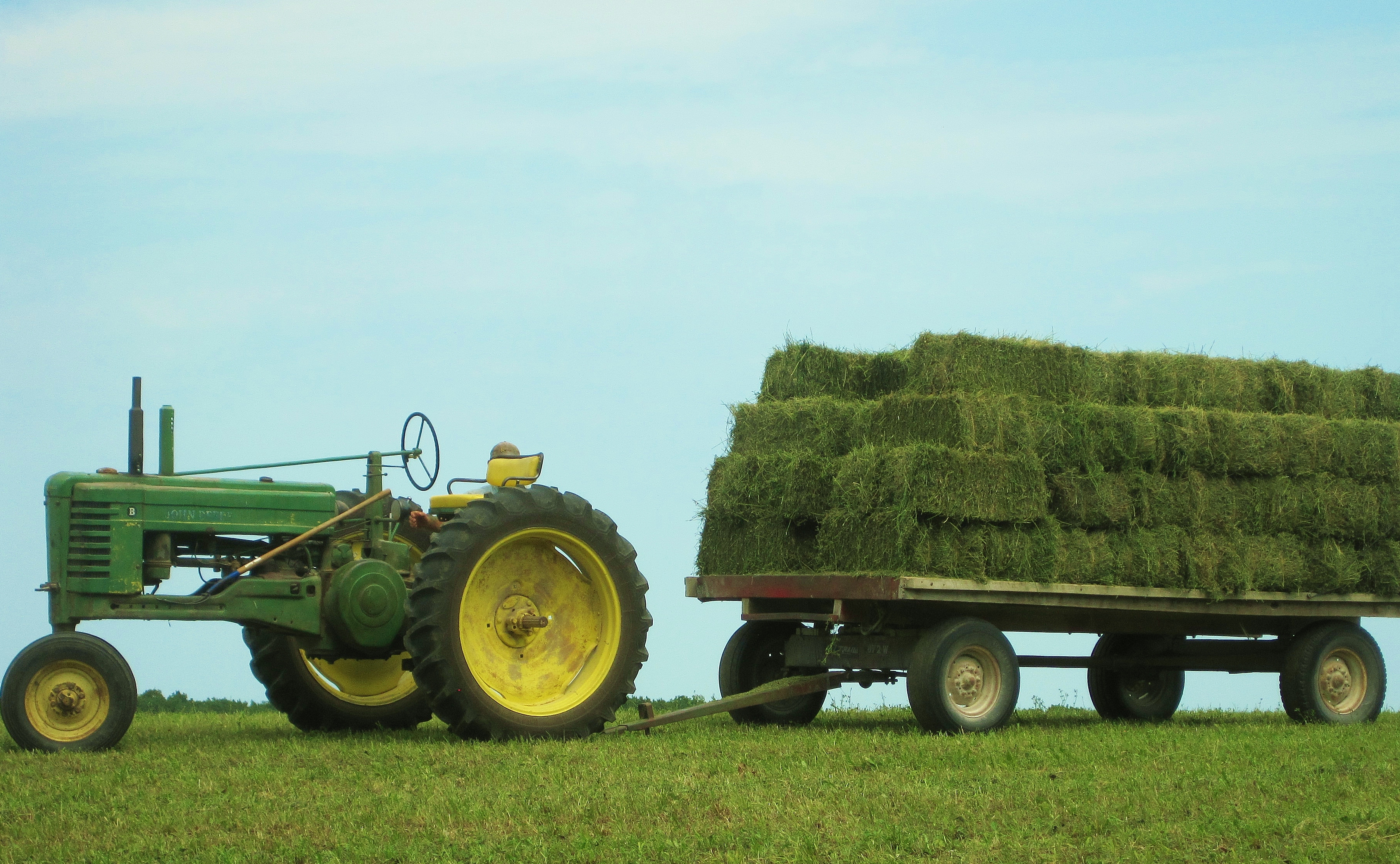
The bales come out of the baler on a chute that lifts it up to a level that the stacker can grab it and pile it neatly in the wagon.  One wagonload holds roughly 80 bales.  When the first wagon is filled my husband takes it to the farm for unloading in the hay shed or in the barn.

green tractor, hay wagon, hay bales, alfalfa hay

John Deere B and loaded hay wagon

Since haying is a 4-man job at our farm, the second stacker joins me in the field.  Another person is already at the farm ready to unload the wagon, so that my husband can work at stacking them in the sheds or barn.  This has been a team job for our family.  We all get tired out, but haying, in most cases, is a satisfying time of working together.

Photo credit: Wenda Grabau
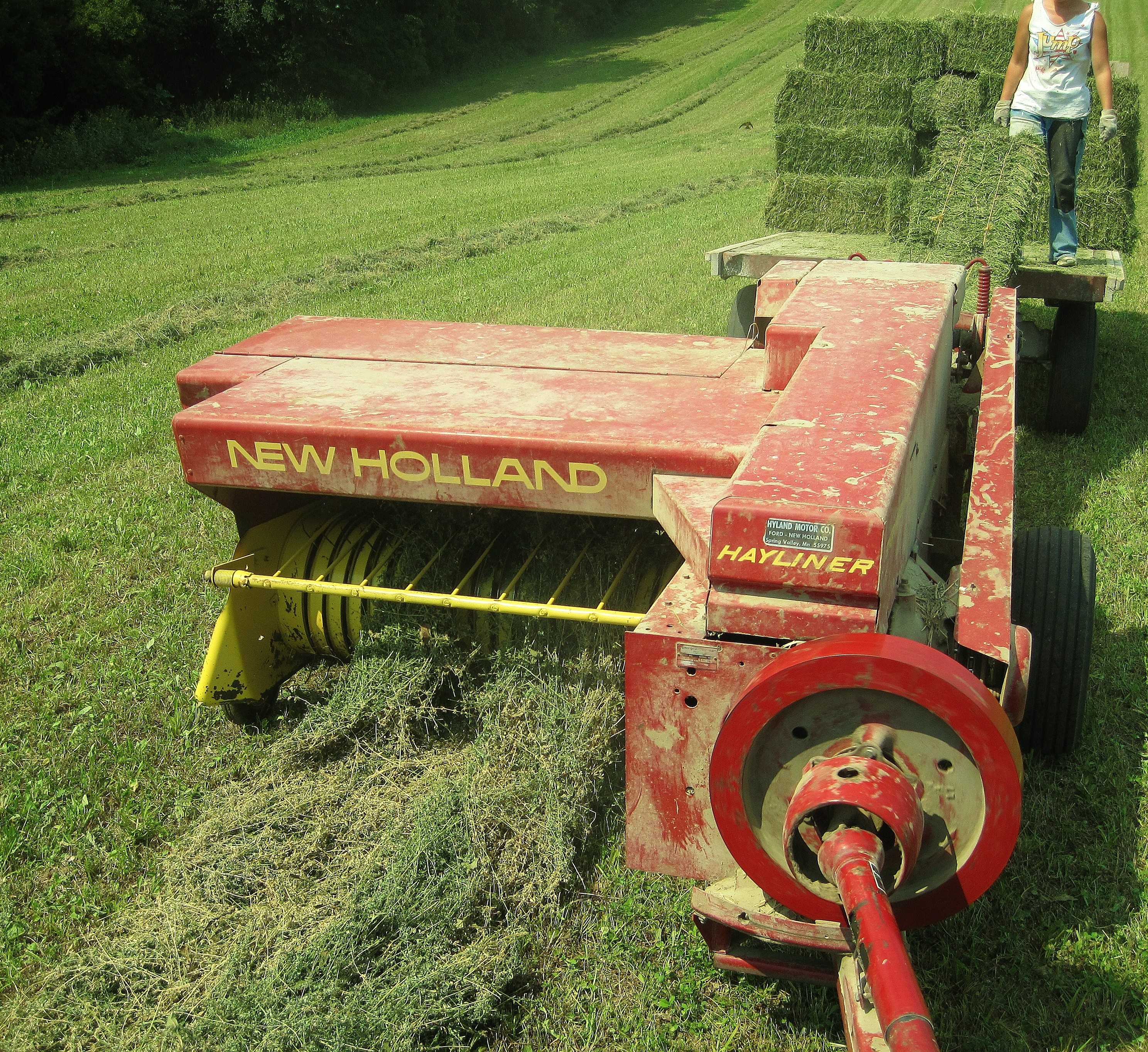
Photo credit: Bretta Grabau

Risky Business

If humidity levels are normal and the sunshine has been steady for a day or two, then we bale the hay.

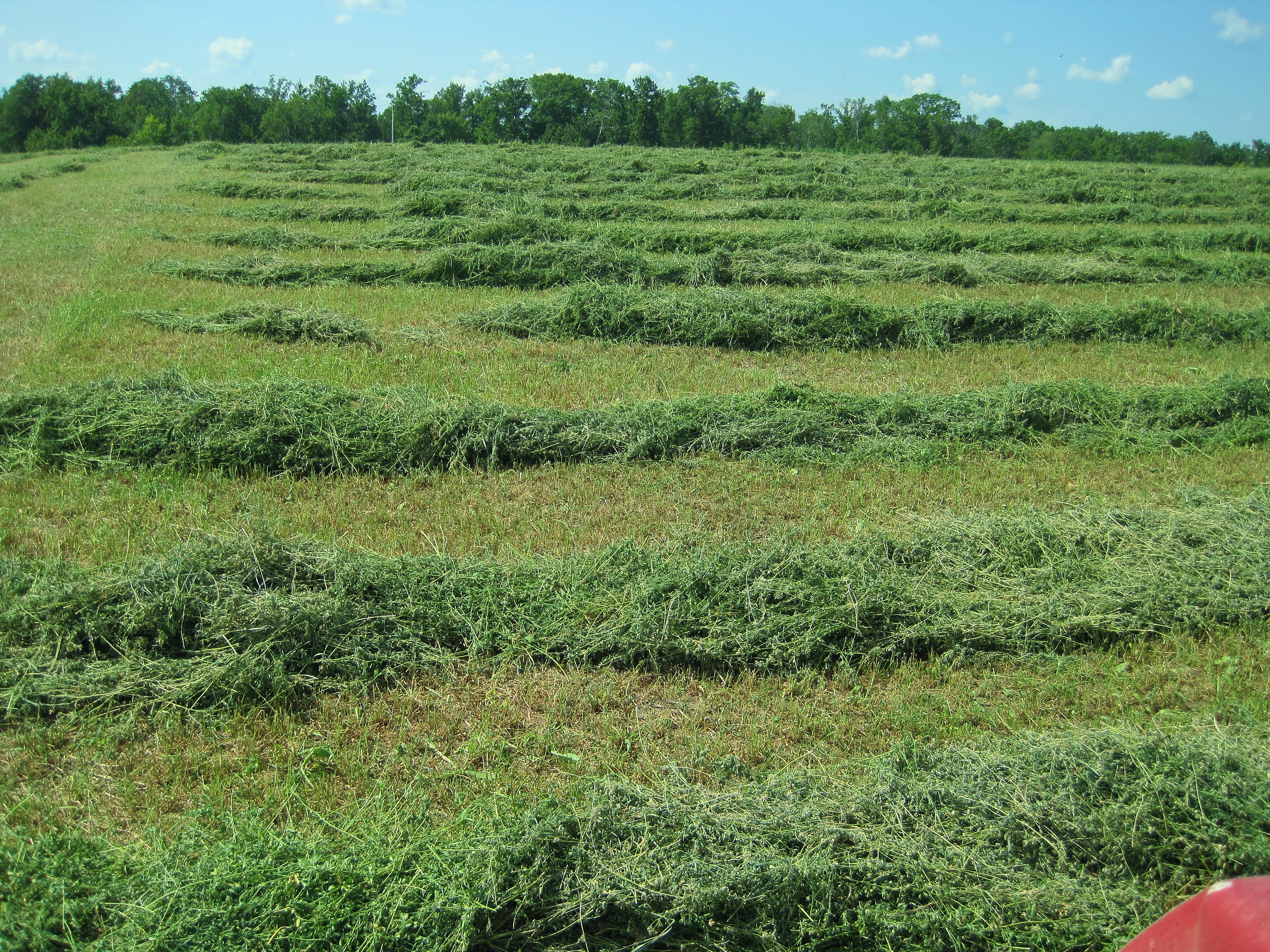
hay swathes, alfalfa hay, drying hay, baling hay

Hay Drying in the Sun

After the morning dew has sufficiently evaporated, my husband or I go out and rake the hay.  The haybine has already dropped the hay into neat swaths on the first  pass through the field.  So when I rake, I just have to follow the rows laid out for me.  The rake has a series of tines that rotate into the hay and sweep it to one side.  This action lifts the hay up and rolls it over much like the curl of an ocean wave as it reaches the shore.  This exposes the hay on the underside of the swath to the sun and completes the drying process before we bale it later in the day.

At this stage, if a sudden rainfall catches up with us, the hay is ruined.   Even in making hay there is risk involved.

Hay is important.  If we have good quality hay, we can market more milk and our annual income is better.  If the hay is worthless we use it for bedding or take it off the field so it does not smother the new growth in the field and discard it.  If we have to buy hay, our profit is greatly reduced.

photo credit: Wenda Grabau

The Cutting Edge

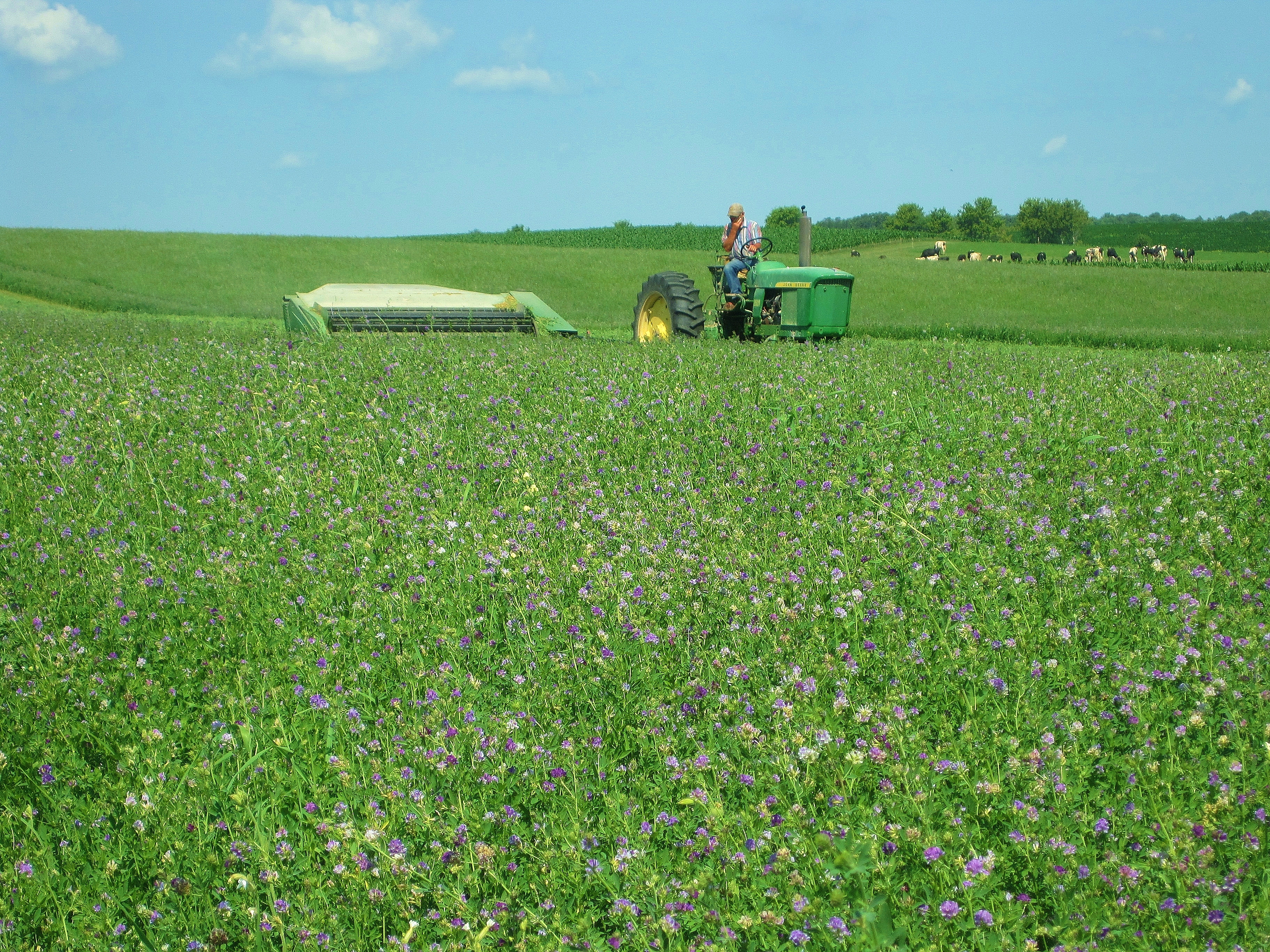
haybine, alfalfa hay, cutting hay, green tractor

Tractor pulls the haybine as it cuts the hay.

When it is determined that the hay is mature enough for cutting, that weather outlook favorable and that the machinery is in readiness, then my husband cuts the hay.

We have small parcels of land that have rolling hills.  So smaller tractors and machinery work well here.  The main machine for haying is the tractor.  Most of the specialized tools we use are powered by it.

In the old days before we farmed here, haying was a bit slower process than ours today.

Before we began our farming careers, farmers would:

  • cut the hay with a cycle mower pulled by a tractor
  • then crimp the hay stalks with a hay conditioner

This way the tractor had to run through the hayfield once for cutting and once for crimping.  The hay-conditioner has rollers in it that crack the hay stems in multiple places.  That speeds up the drying time.

Without the crimping the hay would have to lie in the field a longer time.  This would increase the chance that a change in the weather (rain) could slow the process further and cause decompostion of the hay to start in the field.

Neat Hay swaths made by the Haybine

Hay must be sufficiently dried for storage.  If it is not dried, the moist hay can heat up in the barn so much that fires can start.

Now, we have a tool called the haybine that both cuts and crimps for us on the first pass through the field.  When the weather makes it harder to make the hay in a timely fashion, we cut the hay with the haybine and the next day crimp the hay a second time with our old hay-conditioner.  We use the older technology, too.  It helps our hay to dry a day sooner.

photo credit: Wenda Grabau
Hay There!

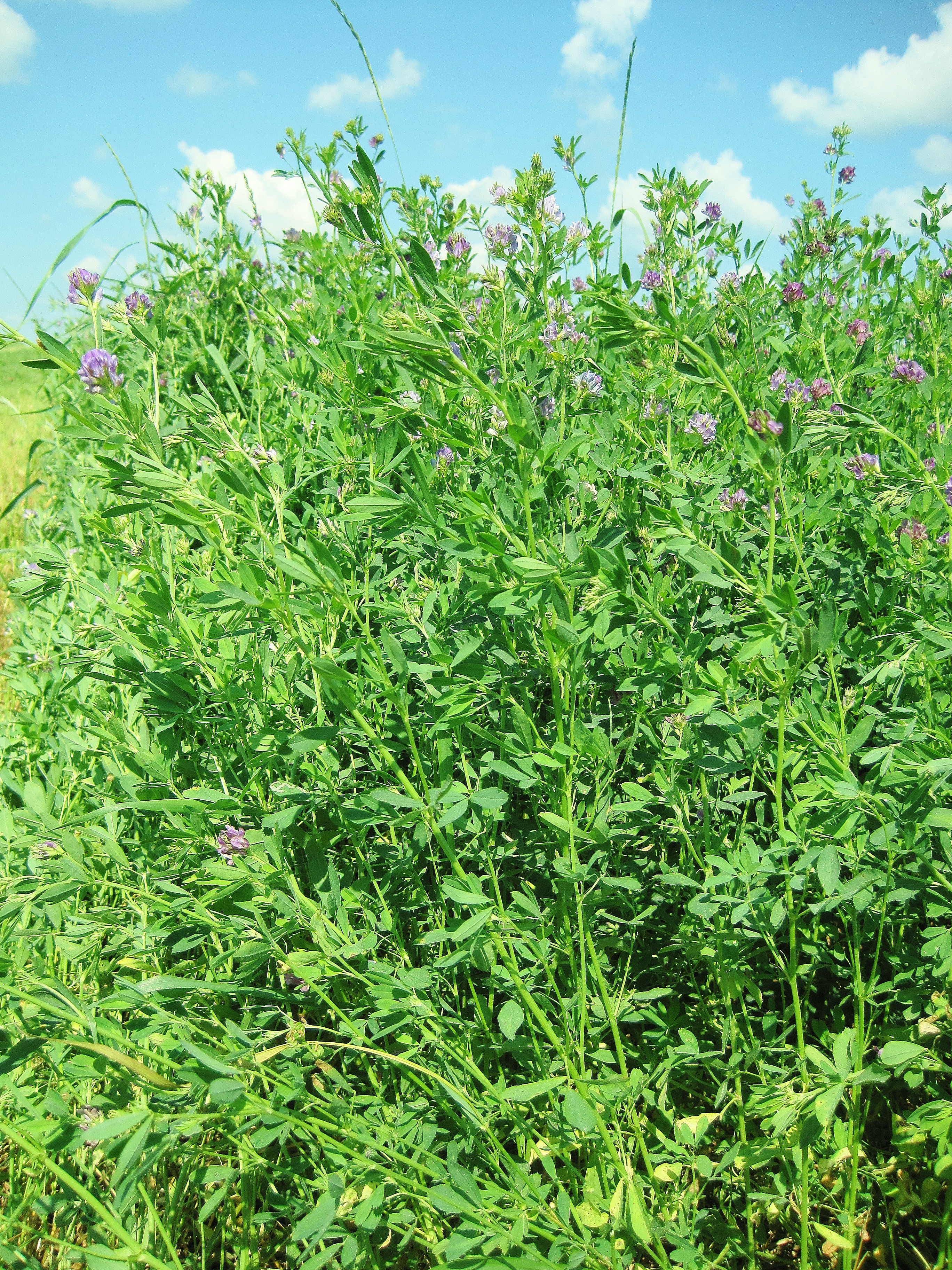
alfalfa, alfalfa hay

Alfalfa Ready for Cutting

Making hay is part of the farmer’s job.

Hay includes:

  • clover
  • grass
  • alfalfa

The high protein value of alfalfa makes it a prime diet for dairy cattle.  Although we are thankful for the grassy hay that comes our way, the alfalfa hay makes for more milk.

Making hay may sound like a simple job, but many variables in cattle, seed, machinery, weather, climate, soil conditions, storage facilities and manpower add to its complexity.

The ideal circumstances are seldom the norm.  So we have to make the best of our hay conditions whatever they are.

In our part of the world, hay grows all summer.  We try to make hay 3 times a year.  Some farmers are able to get 4 or more crops in a season.  Hay is a staple for our animals and warrants a lot of our attention and effort.

photo credit: Wenda Grabau

Amber Waves

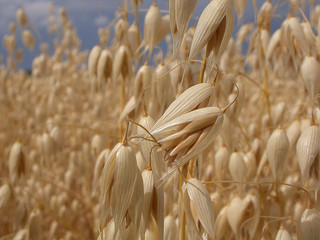
oats, ripe oats, oats on stem

“Amber waves of grain” is a familiar phrase from the patriotic song, America, the Beautiful by Katharine Lee Bates.  It makes a poetic sound to the hearer.  But how many non-farm folk have really experienced such a sight?

Wheat, oats and other grains grow up in fields across our land.  As the wind rushes through, the jostling plants resemble the motion of waves in a body of water.  As the grain ripens it turns from shades of green to golden or amber.

Oats are grown on our farm as a cover-crop.  The oats and alfafa are sown together on the freshly tilled earth.  The oats grow quickly while the alfalfa grows more slowly.  The oat blades act as a protection for the young alfalfa.  By the end of July, they are generally ripe and ready for the harvest.

The oat crop is mowed down.  It is left to dry in the sun for a few days and then the combine removes the oats from the straw and collects the grain.  The straw is left in the field for the baler.

We store the oats in a grainery on our farm.  We use them for grinding into feed for our cattle.  The baled straw is stored in the barn and used for bedding for the animals.

Since the alfalfa was also in the crop, was that cut down too?  Yes.   But once the straw is cut, its growing is over.  When the alfalfa is cut, it grows back and supplies a new field of hay.

Give Us This Day

bread loaf, cutting board, bread knife, sliced bread, homemade breadA familiar prayer request used in many churches and homes is, “Give us this day our daily bread…” Matthew 6:11 (KJV)

Today I say, “Thank you” to the Lord.  We have received rain.  It may be in time to save the corn crop.  It is helping the hay crop.  It is still hot and now it is humid, but never mind the discomfort.

To the farmer, the corn and hay are the means of the daily bread that God provides.  And He has sent us rain.  “Thank  you, Lord!”

photo credit: Emily Carlin via photo pin cc

Spiced Green Beans

I have been picking berries and that is temporarily suspended for the summer.  Red raspberries will bear once more this season, in September.

green beans, bean plants, garden

Garden Fresh Green Beans

Now in the heat of summer my attention is turning to the big garden.  My beans are bearing.  Green beans may sound boring to some.  But not to us.  We have found a tasty way to eat them.  We use butter, spice, garlic and seasoned salt.

I don’t recall where the idea for this recipe came from.  So I will give you some starting quantities.  You may alter them to your taste.

Spiced Green Beans

    • Cook or steam about 1 quart of your cleaned and snipped beans.  (You may choose to cut them, but we cook them whole and enjoy them that way.)
    • When they have some crispness still in them (to your liking), drain them
    • Add 1-2 T. butter 
    •  1/8 tsp. garlic powder
    • 1/4 tsp. spice or more to taste (I like oregano, experiment with others, if you like.)
    • 1/2 tsp. seasoned salt 
    • Stir them up and serve.

photo credit: Wenda Grabau

The Bug Hunt

(Continued from “Hidden Protein”.)

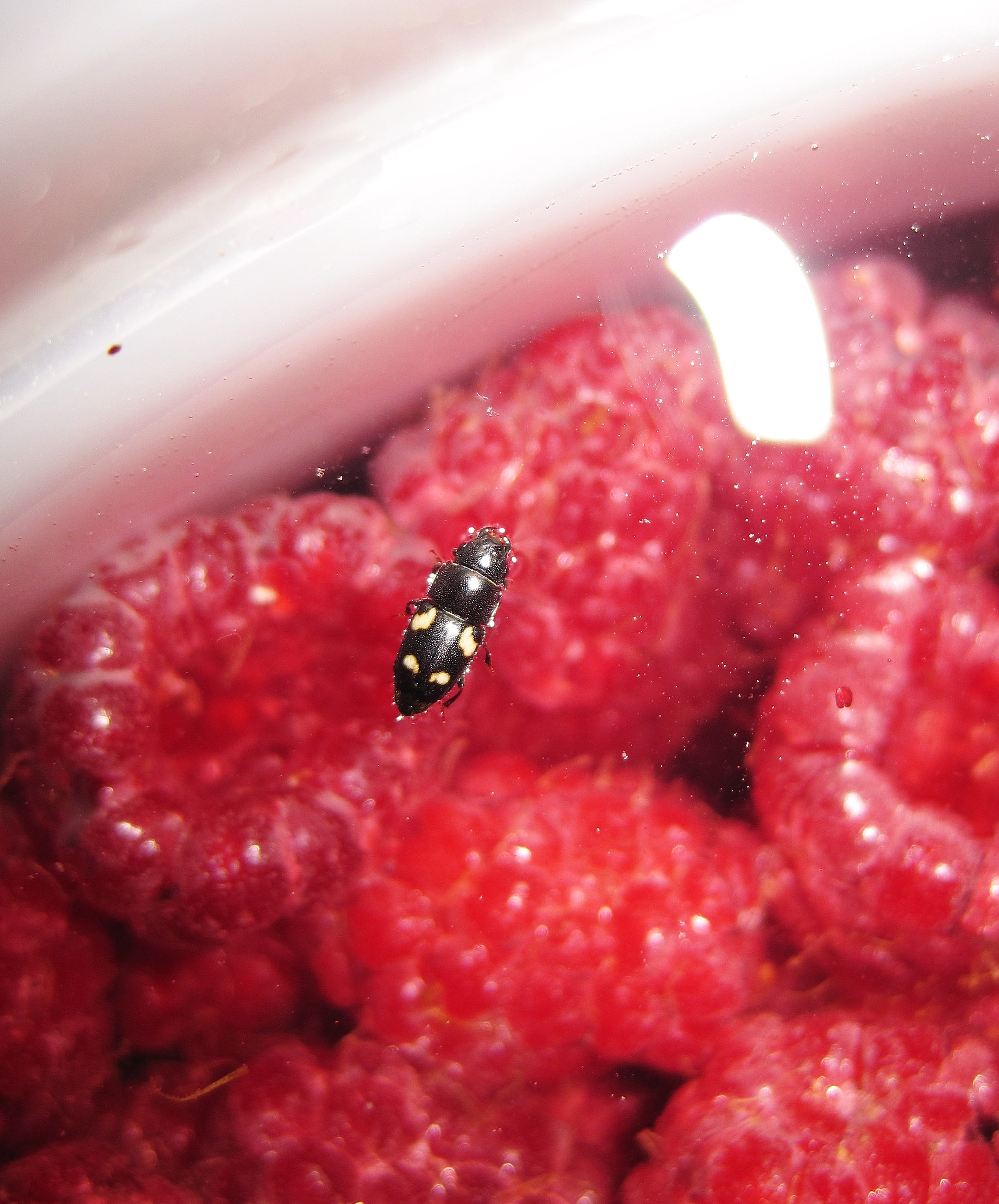
red raspberries, bug, raspberry bug

Raspberry Bugs Come to the Water's Surface

For cleaning the raspberries, it is best to cover them with water and let them sit for about 5 minutes.  The resting time in the water gives the berry bugs time to surface for air.  When they do, I get them.  Often they hide in the little dome inside the berry.  I look closely to try to catch any that tried hiding in there.

After cleaning the berries, I add sugar to taste, and package them in freezer containers.  Today I packaged them in freezer bags.

I packaged 6  1-qt. bags of berries.  As they lay on the table before going into the freezer,  my daughter spied some little black creatures in the raspberry sauce.  In spite of all of my searching for bugs, I missed several.

Generally, during the first crop of the year, at the beginning of the harvest, bugs are not much of a problem.  So, it did surprise me to find so many little bugs coming to the surface of the bagged berries.

Ugh, I was not finished with the job!  Fetching the bugs out of all this great sauce I had just made could be a hardship.  Fortunately with teamwork, my daughter helped me.  As l opened the bag’s seal, she scooped them out with a spoon.

Now, I am done.  The bags are in the freezer.  We will enjoy the fruits of our labors many times over through the year.

I think we got all the bugs out.

Photo credit: Bretta Grabau

Hidden Protein

On an innocent trip to the raspberry bed, I ran across hundreds of red berries.  They were my only goal.  I did not realize it, but this harvest would reveal hidden protein.

black bird, red-winged blackbirdI expected it to be a hot day.  So I got out right after breakfast to pick the fruit.

The sounds in the air captured my attention.  Birds sang to me while I picked.  The rooster crowed, while the hens clucked about their lastest accomplishments in the nest.  I enjoyed listening to the outdoor music.

Kitty soon joined me as he rubbed up against my ankles.  Birds scolded, “Scat, scat!” to turn the cat away from their neighborhood.

Occasionally a cool breeze refreshed me.  At other times the hot sun warmed my neck and back as I bent down to gather the berries.   Perspiration began to collect on my forehead.

red raspberriesAt long last, with the pail filled with tangy-sweet raspberries, I went into the kitchen to process them.

Now, berries are a carbohydrate, but protein lurked in my pail.

(To be continued.)
photo credit: Elliotphotos via photo pin cc
photo credit: kudaphoto via photo pin cc

Page 13 of 15« First...10«1112131415»